29 of ~1250 facilities (US scope)4,115 dock doors9,750 trailer spots0 rail-served
We core-sampled 29 of ~1,250 facilities, We core-sampled the biggest, busiest, and most varied US hubs and terminals; the same yard patterns repeated across the freight network.
Network size: FedEx FY2025 Form 10-K, Item 2 (Properties): ~720 legacy FedEx Ground + ~530 legacy FedEx Express US/Canada surface freight facilities. https://www.sec.gov/Archives/edgar/data/1048911/000104891125000011/fdx-20250531.htm (2025-05-31)
Public audit. Not affiliated with FedEx. Data from satellite imagery + public records.
Click any site for its gate, docks, and drop yards. No badge, no NDA, just what a driver sees.
Your TMS runs the road. Your WMS runs the building. The yards are the tier between them, and they were never on the network.
Every truck gets re-keyed, re-queued, and re-found at each step. The lost time lives between the steps, which is why no single tool ever fixed it. The audit below is that gap, measured on your real yards.
A real audited site, played gate→dock→exit on the true yard geometry. Switch sites with the picker.
Driver rolls past the gate, looks for instructions on where to drop.
Movement durations are honest floors set by yard geometry; the uplift lands on the wait fields (queue + dispatch + secondary checkpoints). “Today” timings reflect the radios-and-clipboards world; “With YardFlow” reflects the protocol acting end-to-end. We may be wrong about parts of this, your actual numbers will tell us where.
Read from satellite + Street View across all 29 facilities. At a comparable network, Primo Brands cut drop-and-hook turns from ~48 to ~24 min. Set your real volumes and margins in the calculator to put a number on it.
Three patterns held across the sites we sampled. None of them show up on a facility list. All of them change how the yard runs.
Memphis Express World Hub is 940 acres. More parcels sort here per night than land at most international airports.
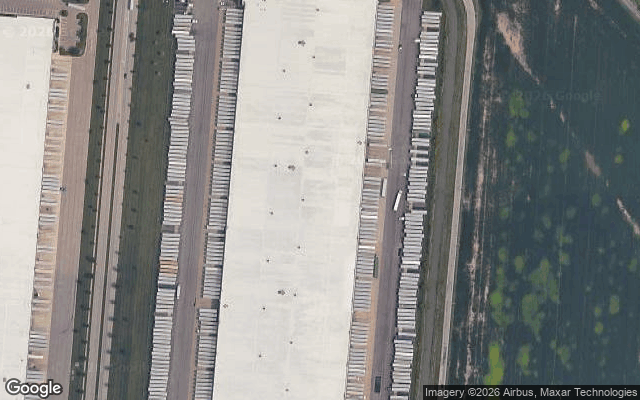
9,750 trailer spots across the 29 sites we sampled. FedEx parks more trailers than any other audited network.
0 of 29 audited sites are rail-served. LTL is highway-to-highway.
This audit is the evidence. The model is the math. Open the calculator seeded with FedEx’s audited yards, set your real volumes and margins, and it sizes the opportunity to the dollar.
This deep-dive is the evidence behind the /for/fedex memo.
Tell us where we got it wrong, or see what 15 minutes of orchestration looks like on your worst site.
A 30-minute call, direct with Casey. We show you what we found across your yards, you tell us straight where it fits and where it does not. If the call goes well, we talk pilot. If not, you keep the analysis.
None of these times work? Email me at casey@freightroll.com or call or text me at 410-236-7434, and we’ll find one.
Casey Larkin, YardFlow. Jake, our founder, joins when it helps.