
Predictability at the dock door
One protocol across every DC.
Retail and grocery networks live and die on what moves through the dock doors. YardFlow turns the yards from a queue into a system, so peak does not break the network.
Drop & hook turn, halved
48 → 24 min
Primo Brands, live
On one protocol
26 sites
Live across the US
Modeled annual gain
$1M+/site
Off Primo's proven economics
Real networks, already mapped
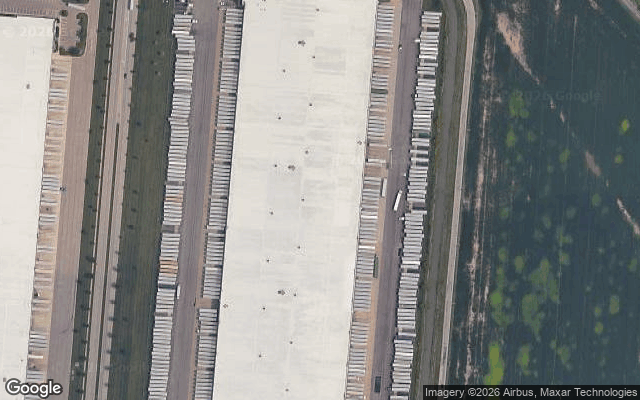
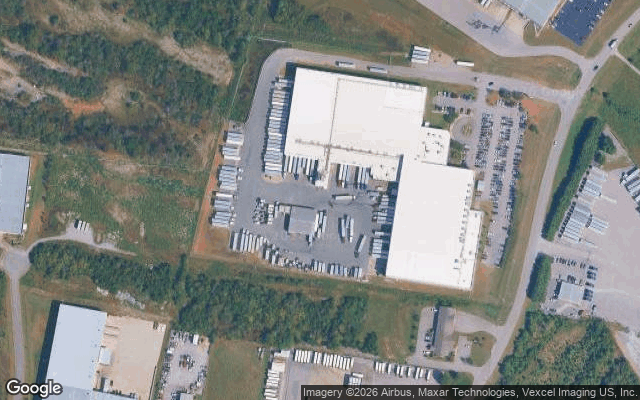
We have audited retail & grocery yards from orbit.
Every template on this page runs against a real audited footprint. Public satellite imagery, modeled geofences, a 22-field classification per site. Open any network to walk the map.
The problem
The dock is the cap
In retail, volume is won at the dock and lost in the yards.
- Trailers pile up, doors sit idle while drivers hunt for spots, and detention compounds across hundreds of loads a day
- Unify the yards and the same dock doors move more freight on the same footprint.
Root causes
Where the capacity leaks
The friction points between a truck at your gate and product out the door.
Leak 01
Idle Dock Doors
Doors sit empty while the right trailer is lost somewhere in the yard.
Leak 02
Detention at Scale
High-volume RDCs multiply every minute of detention across the fleet.
Leak 03
Perishable Dwell
Cold and fresh freight ages in the yard with no exception clock running.
Leak 04
Peak Collapse
Holiday surge overwhelms a yard run on radios and paper.
The protocol
What to Standardize First
Every dock door is a meter. Feed it on a system, not a scramble.
Execution Standards
- Appointment and door assignment at check-in.
- Spot-to-door move orchestration so doors never wait.
- Dwell and detention clocks on every load.
Data Standards
- Digital BOL capture at ingress and egress.
- Exception alerts for perishable dwell aging.
- One network view of turn time across every DC.
Standards compound across the network / the second site is faster than the first
The system
The YardFlow Solution
Under all five: camera vision reads the truck and whatever it pulls at the gate (flowGATE), computer vision on the spotter truck maps the yard (flowVISION), and an agent dispatches the next move (flowAI).
Role 01flowDRIVER
Stop paying people to talk to truck drivers.
It is 2026. Text them. It is faster. No app to download, no guard shack, no clipboard, no training: the driver checks in from the cab and gets routed wherever they need to go, a door or a drop spot. Handles all scenarios. Gate or no gate.
Trucks get in without waiting in line.
- Nothing to download; carriers and drivers onboard themselves
- The camera reads the truck and whatever it pulls on arrival: a trailer, or a chassis with or without a container
- Routed to the assigned door in one message
- SCANPlate ABC-1182
- VERIFIEDChassis 53291
- ROUTEDDoor D7
no app · no guard · 0:42 at gate
Role 02flowVISION
Know where every trailer is. Without the pucks.
Trailer tracking the old way is a tag on every trailer and a reader on every post: cumbersome, expensive, and still wrong. Ours is passive. A camera in the spotter cab maps the yards from the moves the spotter already makes, with a fraction of the hardware and deployment time, and better accuracy.
The yards always know where every trailer is.
- A live yard map built passively from real moves
- No tags, no readers, no manual counts
- More accurate than RFID, with a fraction of the hardware
Role 03flowYMS
Every yard needs a brain.
Not the top quartile. Every one. The right door is assigned and the DC watches every dock at once, on screens that stay live instead of minutes behind. Easy to learn, and built to pay for itself at low-volume yards too.
The dock is ready before the truck parks.
- Every door's live state on one screen, and it stays fresh
- The right door assigned the moment a truck checks in
- Exceptions surface first, before they breach
D1
loading
D2
staged
D3
open
D4
loading
D5
breach
D6
staged
1 breach risk surfaced first
Role 04flowBOL
Paper is expensive. Chasing it is worse.
Three copies of a BOL is embarrassing and costly, and the cost lands later, when a billing dispute sends someone back to the warehouse to find it. The BOL is captured and signed in the driver flow, timestamped, with a chain of custody that holds up. Digital from the gate to the dock.
Signed, timestamped, and it holds up.
- BOL captured and signed inside the driver flow
- A digital chain of custody, timestamped
- Works with the BOLs and the WMS you already have
- Gate in08:14:22
- Door D708:31:05
- BOL stamped09:02:47
digital · timestamped · holds up
Proof
Proof, Not Promises
Primo Brands runs 26 facilities live on YardFlow, the proven economics behind the model.

Pick a time and you are on the calendar.
Thirty minutes, direct with Casey Larkin. Pick an open time below and you are booked.
None of these times work? Email me at casey@yardflow.ai or call or text me at 410-236-7434, and we’ll find one.
Casey Larkin, YardFlow. Jake Koppinger, our founder, joins when it helps.